Athens Travel - Must-See Sights And Experiences
Discover the ancient wonders and vibrant culture of Greece's capital with our Athens travel guide. Explore iconic landmarks like the Acropolis and Parthenon, stroll through historic neighborhoods, and savor delicious Greek cuisine. Our guide offers essential tips and insights to help you make the most of your Athens adventure.
Author:Maya ReyesReviewer:Finn WildeJul 25, 2024310 Shares310.3K Views
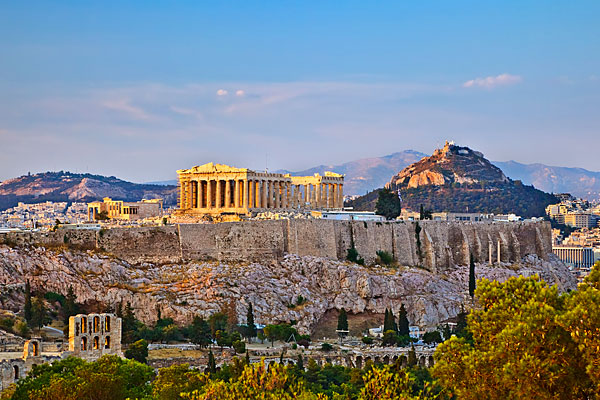
Welcome to our Athens travelguide, your ultimate resource for exploring the rich history and vibrant culture of Greece's capital city. From the majestic Acropolis and ancient ruins to the bustling markets and charming neighborhoods, Athens offers a unique blend of old and new. Whether you're a history enthusiast, a food lover, or an adventure seeker, this guide provides essential tips and insights to help you navigate this fascinating city and create unforgettable memories.
Why Travel To Athens
It wouldn't get into the top ten of Europe's must-see cities, but Greece's capital has improved dramatically over the last few years. The Metro is excellent, easing city mobility and diminishing pollution, while people in general and taxi drivers in particular - buoyed by the Olympics and thumped by the police - have a more positive attitude toward foreigners.
The basic sights are as stupendous as always, but are now more or less connected by a superb, lengthy pedestrian path, while the prime tourist area around the Acropolis and the Plaka district has been buffed.
Downsides
Outside the Acropolis/Plaka area, the city is still a dusty mess and many pavements/sidewalks are a dangerous disgrace, positively anti-pedestrian. Despite publicity to the contrary, a lot of important tourist streets are still signposted only in Greek characters, making navigation tricky. Athens' main station for Thessaloniki, Larisa, recently didn't have a nameplate in any language.

Athens Weather
Athens enjoys a Mediterranean climate with hot, dry summers and mild, wet winters. Spring (March to May) offers warm, sunny days and cool evenings, perfect for sightseeing. Summer (June to August) brings intense heat, often exceeding 30°C (86°F), with minimal rainfall, making it ideal for beach visits and evening activities.
Autumn (September to November) features gradually cooling temperatures, with pleasant weather ideal for exploring outdoor attractions. Winter (December to February) is mild, with temperatures rarely dropping below 5°C (41°F) and occasional rainfall. Overall, Athens' weather is conducive to year-round travel, with each season offering its unique charm.
Things To Do
Sights are clustered in an easy 8 sq km (5 sqm) rectangle, running from Syntagma (NE) to Temple of Olympian Zeus(SE) to the south corner of Acropolis Hill (SW) to Thiseio metro/Keramikos cemetery (NW). Syntagma Square is where you get to see guards in fluffy bobble shoes outside parliament (pictured above right) or catch the metro or airport bus.
The Temple of Olympian Zeus (aka Olympeion) is not wildly impressive but heralds the start of the excellent new pedestrian walkway that will take you to Acropolis Hill - along with hordes of other visitors of course - to see the Parthenon temple. Try to avoid the Acropolis when it's wet, paths are polished marble and will be slippery. n.b. All remaining carvings/statues are plaster.
From there, you have three good alternative routes. Either a) continue to tranquil Keramikos cemetery and its magnificent funerary monuments, b) go round the corner to see the little whitewashed houses of Anafiotika or c) dive down into the ancient Agora (market), the Temple of Hephaestus or varied Roman remains.
The New Acropolis Museum is a work of art itself and deserves a half-day visit at a modest cost. Some memorable sights involve little more than a couple of Romanesque columns, a partially dissolved face, and a pile of rocks but the top floor is spectacular. Outside these sights tourists with time on their hands may enjoy the views from Lykavittos Hill, a little north-east of Syntagma; cable car available.
Best Sights
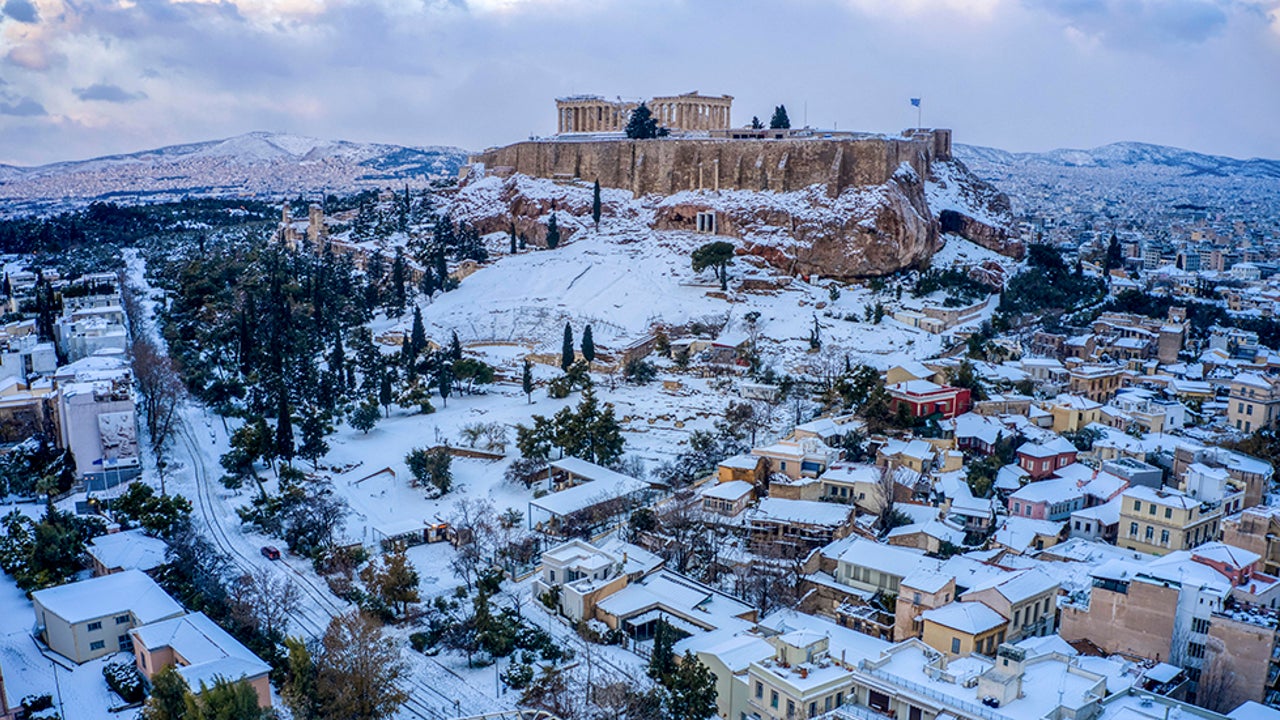
Acropolis Hill - including the Theatre of Dionysos, the little Erechtheion temple, and the main attraction, the Parthenon.
Ancient Agora - an old marketplace, including the Agora Museum inside the reconstructed Stoa of Attalos, and the Temple of Hephaestus. Up the hill, there's expensive dining and a cute little Anafiotika village.
Syntagma Square - a metro station, the Parliament building, and guards in pom-pom clogs.
Temple of Olympian Zeus - though not much is left barring a dozen massive Corinthian columns and the Arch of Hadrian.
Monastiraki district/metro stop - once home to Lord Byron now home to Athens flea market, the Ceramic Museum, a terrific atmosphere, and downmarket shopping bargains galore. Near Plaka.
Filopappos Hill - a calm green walk, some great views (the photo at the top was taken there), the Dora Stratou Theatre, and a pleasant café.
Thision district/metro stop- access to fashionable, non-touristy Psiri district and Keramikos cemetery.
Benaki Museum - Displays the historical and cultural development of the Greek nation through collections that cover eras from Roman domination to the medieval period, the fall of Constantinople and the struggle for Greek independence in 1821, Clothing, jewelry, wood carving, and much more. Near Parliament.
National Archaeological Museum - is well organized and houses some wonderful exhibits, especially art and artifacts from the ancient but advanced Minoan civilization (possibly the original Atlanteans, wiped out by a Santorini eruption) and staff that are dull, disinterested, noisy, and smoke inside the museum. Displays include statues, masks, pottery, coins, and ornaments. The museum is a bit out of town in an area that is quite shabby and unsettling so take a cab if that would bother you.
Psiri (Psyrri) district - the best area for eating and drinking alongside affluent young locals, as opposed to neighboring Plaka's tourist herds.
Short Trips Out
- Piraeus & RafinaAthens' two main ports Piraeus is an easy metro ride, while Rafina is an hour on a bus. Neither is good for much other than access to Greece's islands.
- Voula and VouliagameniBeaches, near Athens, 45 minutes by metro/bus. Open 8 am-8 pm, it costs a few euros.
- Cape Sounion70kms from the city, this is a much-favored sunset viewpoint, with its Temple of Poseidon and graffiti from Lord Byron. Buses take about two hours.
- Napfliona very pretty old town with elegant houses and huge forts, it makes a good base to explore ancient sites like Mycenae and Epidaurus. 2.5 hours from the city by bus.
- The Oracle at Delphi is 180 km away north-west of Athens so not exactly a short trip but perhaps over a couple of days?
- Meteora mountain monasteries: Another fascinating trip, well worth a couple of days.
Activities
- Walking - The city outside the center is not very foot-friendly, save for a couple of parks, but the best place to give the legs a beating is up one of Athens's hills - Lykavittos and Filoppos are especially good destinations.
- Swimming - On a hot day you may need a plunge, and in the city centre hotel pools are your only choice. However, not far away by bus and/or metro are a couple of decent pay beaches...Voula and Vouliagmeni - arguably the best.
- Tennis & Golf Tourists can use Glyfada Golf Club near the airport.
- SkiingFrom December-March at Mt Parnassos, 3hrs north-west.
Festivals
Feb/March, Carnival. Various local festivities during the 3 weeks up to Lent.Easter: Good Friday eve procession, especially on Lykavittos Hill. Also Saturday night candle Mass and more processions.mid June - end Aug, Athens Festival. Ancient Greek drama, music, and dance in scenic settings such as Acropolis' Theatre of Herodes Atticus.
Arts/Culture
Museums - The New Acropolis Museum, Athens, was fully opened to the public in 2009. This magnificent new building is a work of art itself and deserves a half-day visit for €1. Many tourists will wish to see antiquities in the National Archeological Museum.
The other must-see collection is at Benaki Museum, an old family house revamped as an eclectic private museum, showing pottery, jewelry, furniture, and ethnic clothing from the region.
Greek Dance - Discos shut up shop as locals go to work in folk dances from May to September. The most famous group is the Dora Stratou Dance Company performing on Filopappos Hill every evening.
Music, Opera, and Ballet - Concerts and performances are regular at Athens Concert Hall, Pallas Theatre, and Olympia Theatre. Also, June-August sees the city festival, some of it in Acropolis' Theatre of Herodes Atticus.
Traditional Music - Some tavernas in Plaka, Monstariki, and Psiri have live Greek music. Keep your eyes open for promotional material and your ears open as you wander.

Food
Plaka is where most newly arrived tourists eat but beware of ridiculous prices in romantic locations, such as on steps up the hill. Food variety and quality are generally good, though seafood comes at very silly prices and local taramasalata tastes horribly like pink mashed potato. Budget travelers will enjoy kebab/ salad/beer deals for around €6, while more adventurous tourists escape to stylish Psiri.
Beware Greeks Bearing Gifts
A common brazen scam perpetrated on single male visitors consists of a friendly Greek suggesting going for a drink in some great little bar. A few drinks with a few friends and suddenly the bill appears, it's monstrous and everyone is suddenly less friendly..Moral: don't go drinking with Greek people you don't know, and keep track of costs! (pay after every drink?)
Athens Travel Guide - FAQs
What Is The Best Time To Visit Athens?
Best Time:The best time to visit Athens is during the spring (March to May) and autumn (September to November) when the weather is pleasant, and the crowds are smaller.
Summer:Summers are hot and busy with tourists, but they are perfect for beach trips and outdoor evening activities.
Do I Need A Visa To Visit Athens?
Visa Requirement:Depending on your nationality, you may need a visa to enter Greece. EU citizens do not need a visa, while travelers from many other countries can stay visa-free for up to 90 days. Check with your local Greek consulate for specific requirements.
How Do I Get To Athens?
By Air:Athens International Airport (Eleftherios Venizelos) is the main airport, well-connected to major cities worldwide.
By Sea:Ferries connect Athens with numerous Greek islands and other Mediterranean destinations, arriving at the Port of Piraeus.
By Train:Athens is accessible by train from other Greek cities and some international destinations.
What Are The Must-see Attractions In Athens?
- The Acropolis:An ancient citadel featuring the Parthenon, Erechtheion, and Temple of Athena Nike.
- The Acropolis Museum:A modern museum showcasing artifacts from the Acropolis.
- The Ancient Agora:The historic center of public life in ancient Athens.
- Plaka:A charming, historic neighborhood with narrow streets and traditional tavernas.
- Syntagma Square:The central square, home to the Hellenic Parliament and the changing of the guard ceremony.
What Is The Best Way To Get Around Athens?
Public Transport:The Athens Metro, buses, and trams are efficient and affordable. Consider purchasing a multi-day travel pass.
Taxis:Taxis are widely available. Use official services or apps like Beat and Uber to avoid overcharging.
Walking:Many of Athens' main attractions are within walking distance of each other, making walking a great option.
Is Athens Safe For Tourists?
Safety Tips:Athens is generally safe, but it's wise to stay vigilant. Keep an eye on your belongings, especially in crowded areas and on public transport, and avoid poorly lit areas at night.
What Traditional Greek Dishes Should I Try In Athens?
Must-Try Dishes:
- Moussaka:A baked dish of eggplant, minced meat, and béchamel sauce.
- Souvlaki:Grilled meat skewers, often served with pita bread.
- Spanakopita:Spinach and feta cheese wrapped in phyllo pastry.
- Greek Salad:A fresh salad with tomatoes, cucumbers, olives, and feta cheese.
Do People In Athens Speak English?
Language:While Greek is the official language, English is widely spoken in tourist areas, hotels, restaurants, and shops. Learning a few basic Greek phrases can be helpful and appreciated.
Final Words
Athens is a city brimming with history, culture, and modern attractions. By following this travel guide, you'll be well-equipped to explore the many facets of this remarkable city. Whether you’re marveling at ancient landmarks, savoring Greek cuisine, or simply soaking in the vibrant atmosphere, Athens promises an unforgettable travel experience. Enjoy your adventure in the heart of Greece!

Maya Reyes
Author
Maya Reyes’s wanderlust was sparked in the temples of Luang Prabang, where the scent of lemongrass and the chants of monks revealed the transformative power of travel.
Since then, her journey has been defined by cultural immersion and authentic connections. From learning batik in Indonesia to sharing meals with nomadic families in Mongolia, Maya seeks experiences that highlight the human stories behind each destination.
Travel for her is a way to weave her narrative into the world’s cultural tapestry, creating bridges across diverse ways of life. Maya has traveled to 15 countries and shares her insights through writing and storytelling.

Finn Wilde
Reviewer
For Finn Wilde, the wilderness is more than just a destination - it’s a way of life. Over the past decade, he has led multiple expeditions in some of the world’s most remote regions, from the icy fjords of Greenland to the rugged trails of Patagonia.
Finn emphasizes sustainability in all of his adventures, helping participants connect with nature while promoting responsible exploration. His expeditions inspire individuals to explore the great outdoors while fostering a deep respect for the environment.
Latest Articles
Popular Articles